Fernly Park
The Murder of Roger AckroydFernly Park, owned by Roger Ackroyd, is the principal country-house setting of the murder investigation. Its drawing room and study frame the evening before the killing; its terrace, drive, and summerhouse become part of the detective’s reconstruction of the night. The house’s apparent domestic order conceals both the murder and a chain of private meetings that lead beyond its grounds.
Setting and Household
Fernly Park is one of only two houses of importance in King’s Abbot; the other is King’s Paddock, the house left to Mrs. Ferrars by her late husband. The local account presents Fernly Park as the home of Ackroyd, a prosperous manufacturer whose public life is closely bound to the village. Though he resembles the traditional country squire in manner and appearance, he is not one: he has made his fortune manufacturing wagon wheels and supports local parish funds, cricket, clubs, and institutions for disabled soldiers.
The house has a working household as well as a social life. Parker, the butler, answers the door when Dr. James Sheppard arrives for dinner shortly before half-past seven. Geoffrey Raymond, Ackroyd’s secretary, crosses the hall carrying papers on his way to the study. These ordinary movements place the study within the daily business of the house before it becomes the scene of a crime.
The Murder and the Locked Study
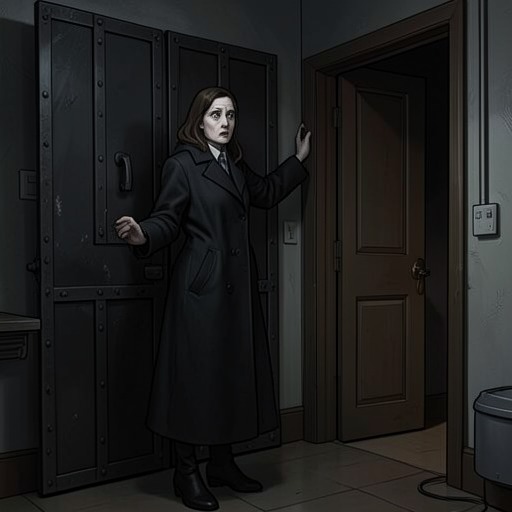
After Ackroyd has been found murdered, Sheppard returns to Fernly Park in response to a telephone call. Parker meets him at the entrance. The study door cannot simply be opened, and Sheppard and Parker use a heavy oak chair to break the lock. The forced entry transforms the room from a private interior into the focal point of the investigation.
Inside, Ackroyd remains seated in the armchair by the fire, his head fallen to one side. A piece of twisted metal is visible below his coat collar, indicating that he has been stabbed. The arrangement of the body and the secured door make the study central to the apparent locked-room puzzle: investigators must account not only for the murder, but also for how the room came to seem inaccessible.
Grounds, Clues, and Separate Meetings
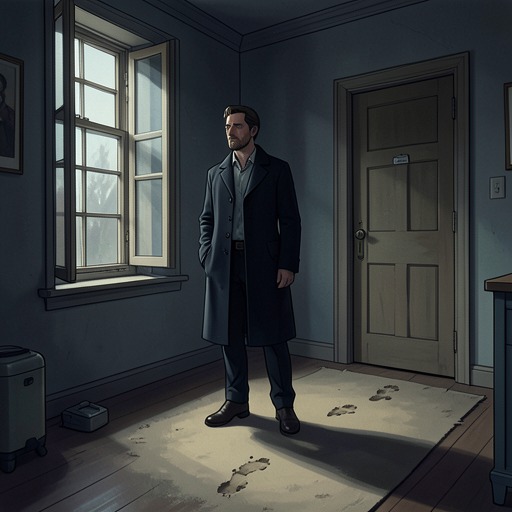
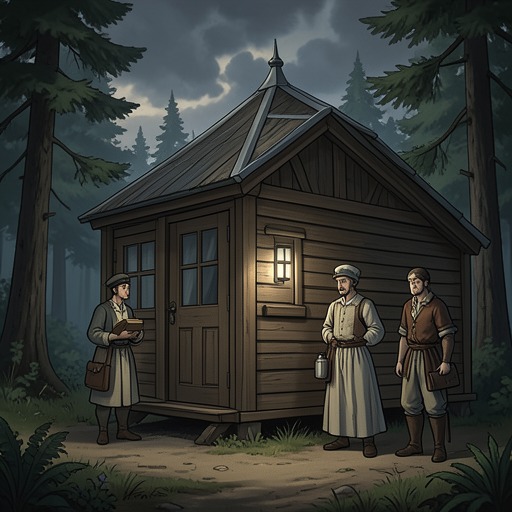
The investigation extends from the house to its surrounding paths. During his first examination, Hercule Poirot walks with Sheppard along the terrace and is shown footprints on a windowsill. Inspector Raglan then takes him along the path leading to the drive. Poirot’s attention turns to the summerhouse, which he searches carefully. There he finds a scrap of starched cambric and an empty goose quill. The first suggests a maid’s apron; the second points toward a visitor who used drugs.
These objects initially appear to join separate people in a single encounter. Ursula Bourne, the parlour maid, has no firm alibi for the period she says she spent in her bedroom, and a stranger with an American accent had come to the grounds. But their timings do not fit one meeting: Bourne could not have reached the summerhouse before half-past nine, while the stranger must have arrived shortly after nine. Poirot therefore considers the possibility of two visits, rather than forcing the clues into one account.
The summerhouse also has a private connection to Miss Russell, the housekeeper. In her account of the evening, she explains that she had received a message from a man who said he was coming. Not wishing him to come to the house, she wrote to the address he had supplied and arranged to meet him there. She then slipped out through the drawing-room window, left a note saying she would be there at about ten past nine, and hurried back. On returning, she encountered Sheppard, who might have wondered why she was out of breath; she says she did not know he was expected to dinner that night. The grounds thus contain evidence of distinct meetings, not a single straightforward explanation for the stranger’s presence.
Rumour, Concealment, and the Wider Investigation
Fernly Park’s importance reaches beyond its rooms and grounds because information about the case circulates through the village and the household. When Inspector Davis raises the possibility of blackmail, Sheppard suggests that Parker could have heard talk of it by listening at the study keyhole. Davis explains that his inquiries into Parker’s conduct have made him suspicious and that Parker had offered a confused account involving blackmail. The episode shows how a fragment of overheard information can become part of the investigation while leaving its source and meaning uncertain.
Rumour travels beyond the house as well. Colonel Carter mentions having heard that blackmail may be connected with Ackroyd’s death and speculates that a woman is involved. His confident suggestion illustrates the village’s appetite for interpreting the mystery, not proof of the claim. The contrast between circulating theories and Poirot’s examination of physical traces gives the estate two roles: it is a place where secrets are hidden, and a network of rooms and paths whose details can test the stories people tell.
The house also figures in the search for Ralph Paton. Poirot later explains that Sheppard had concealed the young man from the police, but not at his own home. Reasoning that the hiding place must be nearby, Poirot rejects a hotel and ordinary lodgings in favour of a nursing home for the mentally unfit near Cranchester. He tests the idea by inventing a nephew with mental trouble and asking Caroline about suitable institutions. Her information leads him to a home where Sheppard had brought a patient early on Saturday morning; Poirot identifies that patient as Paton, who had been registered under another name. The discovery reveals the extent to which the investigation must look beyond Fernly Park even as the house remains the case’s central point of departure.